
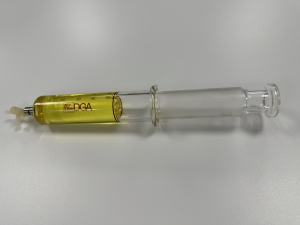
Transformer dielectric fluid plays a critical role in the safe and reliable operation of electrical equipment. It provides electrical insulation, transfers heat away from energized components, and helps protect internal transformer components from damage. Over time, operating temperatures, electrical stresses, moisture, oxidation, and other contaminants can affect the condition of the fluid and the insulation system.
Routine dielectric fluid testing gives transformer owners valuable information about equipment condition, potential developing problems, and the need for maintenance. However, receiving a laboratory report is only the first step. Understanding what the results mean—and how to interpret them for the specific type of fluid in the transformer—is what makes testing useful.
Mineral oil, natural ester, synthetic ester, and silicone fluids have different chemical and physical characteristics. As a result, their test results should not always be evaluated using the same criteria.
This guide explains the most common transformer dielectric fluid tests, what the results can reveal, and why fluid type, equipment history, and trends over time are essential to making informed maintenance decisions.
1. Start by Identifying the Type of Dielectric Fluid
Before interpreting a laboratory report, identify the insulating fluid used in the transformer. Different fluids can respond differently to heat, moisture, oxidation, and electrical stress. Applying acceptance criteria intended for one fluid to another can lead to incorrect conclusions.
Mineral Oil
Mineral oil is the traditional insulating fluid used in many power and distribution transformers. It provides effective electrical insulation and cooling and has a long history of use in electrical equipment.
When interpreting mineral oil test results, particular attention should be given to dielectric breakdown voltage, moisture content, acidity, interfacial tension, dielectric dissipation factor, and dissolved gas analysis (DGA). Together, these tests help evaluate fluid quality, aging, contamination, and possible internal transformer faults.
Natural Ester Fluids
Natural ester fluids are generally manufactured from vegetable oils. They are used in applications where characteristics such as biodegradability and high fire point are important.
Natural esters have different moisture-handling characteristics than mineral oil. They can dissolve considerably more water while maintaining a relatively low level of moisture in the cellulose insulation under appropriate conditions. Consequently, a moisture result that appears high compared with a mineral oil guideline does not necessarily indicate the same level of concern in a natural ester transformer.
Natural ester results should be evaluated using criteria appropriate to the specific fluid, including its operating history and the condition of the solid insulation.
Synthetic Ester Fluids
Synthetic ester fluids are engineered insulating liquids that can offer high fire points and other desirable operating characteristics. Their performance and moisture behavior differ from those of both mineral oil and natural ester fluids.
Testing should consider the specific ester formulation and the manufacturer's recommendations. Moisture, acidity, dielectric strength, and dissolved gases must be interpreted in the context of the fluid's chemistry rather than by automatically applying mineral oil limits.
Silicone Fluids
Silicone fluids are used in certain transformers where high fire resistance and thermal stability are desirable. Their chemical properties differ substantially from those of petroleum-based mineral oil and ester fluids.
Silicone fluid test results should be compared with the appropriate specifications for the particular silicone product and equipment application. Test methods and interpretation criteria developed for mineral oil should not be assumed to apply universally.
The key principle: Always establish the fluid type before deciding whether a test result is acceptable, requires monitoring, or warrants corrective action.
2. Understanding Dielectric Breakdown Voltage
Dielectric breakdown voltage, commonly called dielectric strength, measures the voltage at which an insulating liquid breaks down under specified laboratory test conditions.
This test helps evaluate the fluid's ability to withstand electrical stress. Moisture, particles, fibers, and other contaminants can reduce the measured breakdown voltage.
What Do the Results Mean?
- Results meeting the applicable criteria: The fluid demonstrates acceptable breakdown performance under the test conditions. Other tests are still necessary to evaluate its overall condition.
- Results below the applicable criteria: Moisture, contamination, or other factors may be affecting the fluid's insulating performance. Additional investigation may be appropriate.
- Declining results over successive tests: A downward trend may indicate increasing contamination, moisture ingress, or deterioration in fluid condition.
A low breakdown voltage does not automatically mean that the fluid must be replaced. Depending on the cause, filtration, dehydration, or other appropriate fluid-processing methods may improve its performance.
Conversely, a high breakdown voltage does not prove that the fluid or transformer is in good overall condition. A transformer may have acceptable dielectric strength while experiencing oxidation, deteriorating paper insulation, or an internal electrical or thermal fault.
Test methods matter as well. ASTM D1816 and ASTM D877 use different electrode arrangements and procedures, so their results should not be treated as directly interchangeable. Comparisons should use the same method and appropriate acceptance criteria whenever possible.
3. Interpreting Moisture Content
Water is one of the most important factors affecting transformer insulation. Moisture can reduce the dielectric strength of insulating liquids and contribute to the deterioration of the cellulose paper and pressboard that insulate internal transformer components.
Laboratories commonly report moisture content in parts per million (ppm), often measured using Karl Fischer titration.
What Should You Look For?
- The type of dielectric fluid.
- The transformer's operating temperature at the time of sampling.
- Whether the transformer has recently been filled, processed, or exposed to moisture.
- The condition and age of the solid insulation.
- Previous moisture readings and whether the level is increasing.
Why Fluid Type Matters
Mineral oil has relatively limited water solubility compared with ester fluids. Natural and synthetic esters can hold substantially more dissolved water. Therefore, the same moisture concentration in ppm can have different implications depending on the fluid.
A useful interpretation may require considering relative saturation, temperature, and the distribution of moisture between the liquid and the solid insulation. A single ppm result cannot reliably establish how much moisture is present in the transformer's paper insulation.
For example, an elevated moisture result in mineral oil may warrant prompt investigation, especially if accompanied by poor breakdown voltage. An ester fluid may show a higher moisture concentration without exhibiting the same dielectric performance concerns. Neither result should be judged without fluid-specific criteria.
If moisture is elevated, the appropriate response may include confirming the result, reviewing sampling conditions, assessing the insulation system, and considering dehydration or other corrective measures.
4. Understanding Acidity and Oxidation
The acid number, also called neutralization number, measures the amount of base required to neutralize acidic constituents in a fluid. It is commonly expressed in milligrams of potassium hydroxide per gram of fluid (mg KOH/g).
In mineral oil, increasing acidity can indicate oxidation and the formation of degradation byproducts. As oxidation progresses, these byproducts can contribute to sludge formation, deposits, and deterioration of the insulating system.
How to Interpret Acidity Results
- Low and stable acidity: Generally consistent with limited accumulation of acidic degradation products, although other tests are still needed.
- Increasing acidity: May indicate progressive aging, oxidation, or contamination.
- High acidity combined with other unfavorable results: May indicate more advanced fluid degradation and a need to evaluate reconditioning, reclamation, or replacement.
Interpretation requires additional care with ester fluids. Esters have different chemical structures, and acid number results cannot automatically be interpreted using the same limits or assumptions used for mineral oil. The fluid's formulation, condition, and applicable product specifications are important.
A high acid number alone does not establish whether the transformer must be taken out of service or whether the fluid can be restored. It should be evaluated alongside dielectric performance, other chemical tests, and equipment history.
5. What Is Interfacial Tension, and When Is It Useful?
Interfacial tension (IFT) measures the force at the boundary between two liquids, typically transformer mineral oil and water. It has historically been used to help assess the accumulation of polar oxidation products and certain contaminants in mineral oil.
As mineral oil ages, oxidation byproducts can reduce its interfacial tension. A declining IFT result, particularly when accompanied by increasing acidity and darker fluid, can indicate deterioration.
However, interfacial tension is not equally useful for every dielectric liquid. Ester fluids have different inherent chemical properties, so mineral oil IFT interpretation criteria should not automatically be applied to them. The laboratory should use tests and evaluation methods appropriate to the particular fluid.
For mineral oil, IFT is most valuable when reviewed as part of a broader assessment rather than as an isolated pass-or-fail measurement.
6. Interpreting Dissolved Gas Analysis (DGA)
Dissolved gas analysis is one of the most important diagnostic tools for identifying potential problems inside an operating transformer.
Heat and electrical stress can decompose the insulating liquid and solid insulation, producing gases that dissolve in the fluid. A laboratory measures these gases to help identify possible abnormal conditions before they develop into more serious failures.
Common gases include:
- Hydrogen (H2): May be associated with partial discharge and other electrical or thermal activity.
- Methane (CH4): Can be produced by thermal decomposition and certain electrical discharge processes.
- Ethane (C2H6): Often associated with lower-temperature thermal decomposition.
- Ethylene (C2H4): Can indicate higher-temperature thermal activity.
- Acetylene (C2H2): Can be associated with high-energy electrical discharges, including arcing.
- Carbon monoxide (CO) and carbon dioxide (CO2): Can provide information about the degradation of cellulose insulation, although their interpretation depends on the complete gas profile and equipment conditions.
No individual gas should be interpreted in isolation. Its concentration, rate of increase, relationship to other gases, and the transformer's operating history all matter.
Why Trends Are Important
A gas concentration that has remained relatively stable over several years may have a different significance from the same concentration that has increased sharply over a short period.
For that reason, DGA programs should establish a baseline and track changes over time. When a concerning result appears, a confirmatory sample or more frequent testing may be appropriate. Significant changes may require a qualified transformer specialist to evaluate the equipment and determine whether further diagnostic work is needed.
DGA Interpretation Differs by Fluid Type
Mineral oil and ester fluids can generate and absorb gases differently under certain operating and fault conditions. As a result, diagnostic methods and thresholds developed for mineral oil should not automatically be applied to natural or synthetic ester fluids.
For mineral oil, IEEE C57.104 provides guidance for interpreting gases generated in service. For natural and synthetic ester fluids, IEEE C57.155 provides fluid-specific guidance. Consult the applicable current editions and guidance when evaluating DGA results.
DGA is a diagnostic tool, not a standalone verdict on transformer condition. Results should be considered with the equipment design, prior test history, loading, temperature, and other available information.
7. Dielectric Dissipation Factor and Power Factor
Dielectric dissipation factor, often expressed as tan delta, and power factor testing evaluate electrical losses within the insulating liquid under specified conditions.
An increase can indicate the presence of polar contaminants, moisture, oxidation byproducts, or other changes that affect the fluid's electrical properties.
Results should be compared with the applicable criteria for the fluid type and test temperature. A rising value may justify further investigation, particularly when it appears alongside increasing acidity or declining dielectric strength.
Because different fluids have different electrical and chemical characteristics, mineral oil limits should not automatically be used to judge ester or silicone fluids.
8. Color, Appearance, and Visual Contamination
Color and appearance provide useful preliminary information, but they cannot establish fluid condition by themselves.
Darkening in mineral oil may be associated with oxidation, aging, or contamination. Cloudiness can indicate water, suspended material, or other contamination. Visible particles or sediment may warrant additional testing and investigation.
However, fluid color can vary naturally, and some fluids have different appearances from mineral oil even when new. Ester fluids, for example, may have a characteristic appearance that should be evaluated against the relevant product specifications.
Visual inspection should therefore complement laboratory testing rather than replace it.
9. How to Interpret Results for Different Fluid Types
The following table summarizes the general considerations for common dielectric fluids.
| Test | Mineral Oil | Natural and Synthetic Esters | Silicone Fluid |
|---|---|---|---|
| Dielectric breakdown voltage | Evaluate moisture, particles, and contamination. | Use ester-specific acceptance criteria. | Use silicone-specific acceptance criteria. |
| Moisture content | Consider ppm, temperature, and paper insulation. | Account for greater water solubility and fluid-specific behavior. | Use appropriate product and equipment criteria. |
| Acid number | Helps evaluate oxidation and aging. | Interpret according to ester chemistry and specifications. | Use silicone-specific methods and criteria. |
| Interfacial tension | Useful for assessing certain mineral oil degradation products. | Do not automatically apply mineral oil limits. | Use appropriate fluid-specific evaluation. |
| Dissolved gas analysis | Apply mineral oil diagnostic guidance. | Use ester-specific diagnostic guidance. | Use applicable guidance and product-specific experience. |
| Dissipation factor or power factor | Evaluate contamination and electrical losses. | Compare with ester-specific criteria. | Compare with silicone-specific criteria. |
| Color and appearance | Look for changes, cloudiness, and sediment. | Compare with the fluid's normal appearance. | Compare with product specifications and history. |
This table is intended as a general guide, not a set of acceptance limits. The exact test methods, applicable standards, fluid formulation, equipment design, and manufacturer recommendations determine how a laboratory result should be evaluated.
10. What Should You Do When a Test Result Is Outside the Expected Range?
An unfavorable result does not automatically mean that a transformer needs to be replaced or that its dielectric fluid must be discarded. The appropriate response depends on the type of result, its severity, the fluid involved, and the overall condition of the equipment.
A practical approach includes the following steps:
- Confirm the fluid type and test method. Verify that the laboratory used an appropriate method and that the results are being compared with the correct criteria.
- Review previous results. Determine whether the finding is new, recurring, stable, or part of a worsening trend.
- Consider related test results. A low breakdown voltage accompanied by elevated moisture may suggest a different corrective action than a low breakdown voltage accompanied by unusual DGA results.
- Confirm questionable results. Where appropriate, collect a properly handled follow-up sample to rule out sampling or analytical issues.
- Determine the appropriate response. Depending on the findings, options may include continued monitoring, fluid processing, dehydration, reclamation, fluid replacement, or further transformer diagnostics.
- Evaluate the complete insulation system. Good fluid test results do not guarantee that the transformer is free of internal problems. Conversely, a fluid-quality issue may be correctable without replacing the transformer.
For unusual or potentially serious DGA findings, prompt evaluation by qualified personnel is important. Operational decisions should be based on the specific risk and equipment circumstances, not solely on a single laboratory value.
11. Why Routine Testing and Historical Data Matter
The greatest value of dielectric fluid testing often comes from comparing results over time.
A single test provides a snapshot. A consistent testing program helps identify developing patterns, establish normal operating conditions, and distinguish stable conditions from emerging problems.
For transformer owners, routine testing can help:
- Identify possible internal faults before a failure occurs.
- Monitor moisture and fluid degradation.
- Determine whether fluid processing or replacement is warranted.
- Support maintenance planning and equipment reliability.
- Document equipment condition for maintenance records and asset-management decisions.
- Provide additional technical information when evaluating used transformers for purchase or resale.
Testing frequency should reflect equipment criticality, age, operating conditions, prior results, manufacturer recommendations, and applicable industry guidance. Transformers supporting critical operations may warrant more frequent evaluation than equipment with lower operational risk.
Conclusion: Test Results Are Most Valuable When Properly Interpreted
Transformer dielectric fluid test results provide important insight into both fluid condition and potential equipment problems. However, meaningful interpretation requires more than comparing numbers against a generic chart.
Mineral oil, natural ester, synthetic ester, and silicone fluids have different characteristics, and their results must be evaluated using appropriate standards and fluid-specific criteria. Moisture, dielectric strength, acidity, dissolved gases, and other measurements each provide a different piece of the overall picture.
By combining accurate laboratory testing with historical trending and informed technical interpretation, transformer owners can make better maintenance decisions, identify potential problems earlier, and protect the long-term reliability of their electrical assets.
Need Help Interpreting Your Transformer Dielectric Fluid Test Results?
Power Substation Services provides dielectric fluid testing to help transformer owners evaluate fluid condition and make informed decisions about maintenance and equipment reliability. Contact our team to discuss your testing needs and how a consistent testing program can support your maintenance strategy.
Learn more about Power Substation Services: https://powersubservices.com/